


Cervical cancer is one of the most preventable forms of cancer when appropriate preventive measures, regular screening, and timely treatment are prioritised. Raising awareness about cervical cancer and encouraging women and families to take proactive steps can make a significant difference in reducing its impact.
On Cervical Cancer Elimination Day of Action, Privaram Cancer Hospital highlights three important steps towards cervical cancer prevention and elimination: HPV vaccination, regular cervical screening, and timely follow-up and treatment.
Step 1: Get the HPV Vaccination
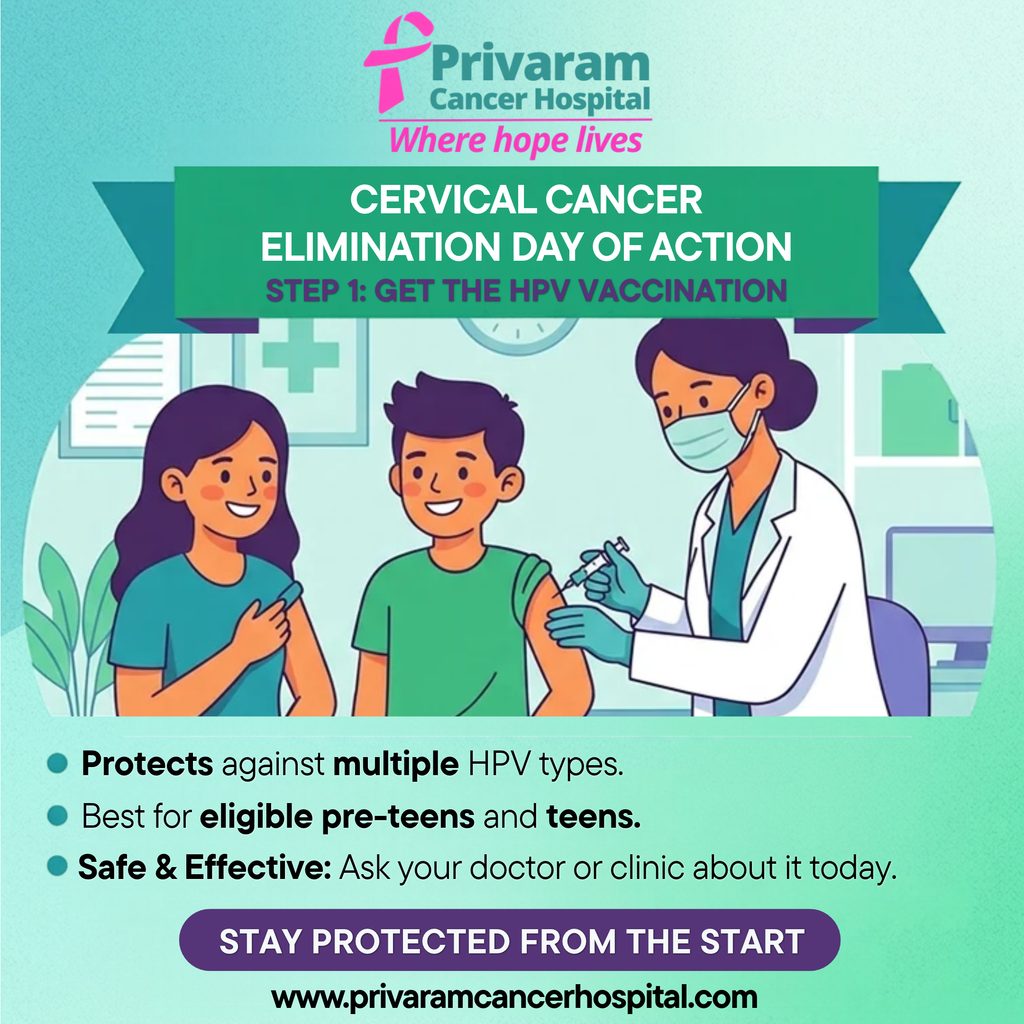
Human Papillomavirus (HPV) is a common virus, and persistent infection with certain high-risk HPV types can lead to cervical cancer.
HPV vaccination is an effective preventive measure that protects against multiple HPV types associated with cervical cancer.
Why is HPV vaccination important?
- Provides protection against multiple cancer-causing HPV types.
- Recommended for eligible pre-teens and teenagers, ideally before exposure to HPV.
- Helps reduce the risk of HPV-related cervical cancer.
- Safe and effective when administered according to recommended guidelines.
Parents and eligible individuals are encouraged to consult a healthcare professional to understand the appropriate age, vaccination schedule, and available HPV vaccines.
Step 2: Get Screened Regularly
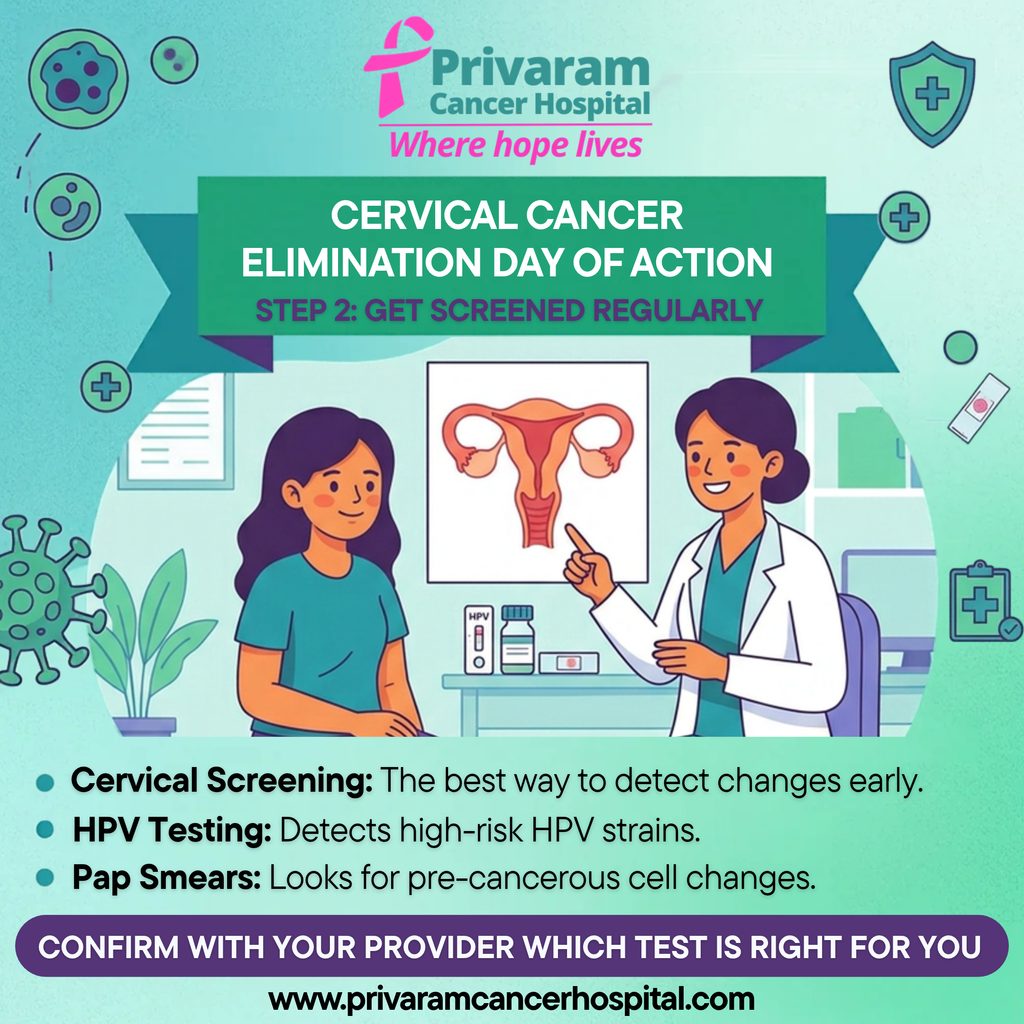
Regular cervical cancer screening plays an important role in identifying high-risk HPV infections and precancerous changes before they develop into cancer.
Even women who have received the HPV vaccine should follow recommended cervical screening guidelines.
Common cervical screening methods include:
- HPV Testing: Detects high-risk HPV strains that may cause cervical cancer.
- Pap Smear: Identifies abnormal or precancerous cell changes in the cervix.
- Cervical Screening: Helps detect changes early, allowing timely medical evaluation and intervention.
The appropriate screening method and frequency may vary depending on age, medical history, and individual risk factors. Consult your healthcare provider to determine which screening test is right for you.
Step 3: Act on Results and Seek Timely Treatment
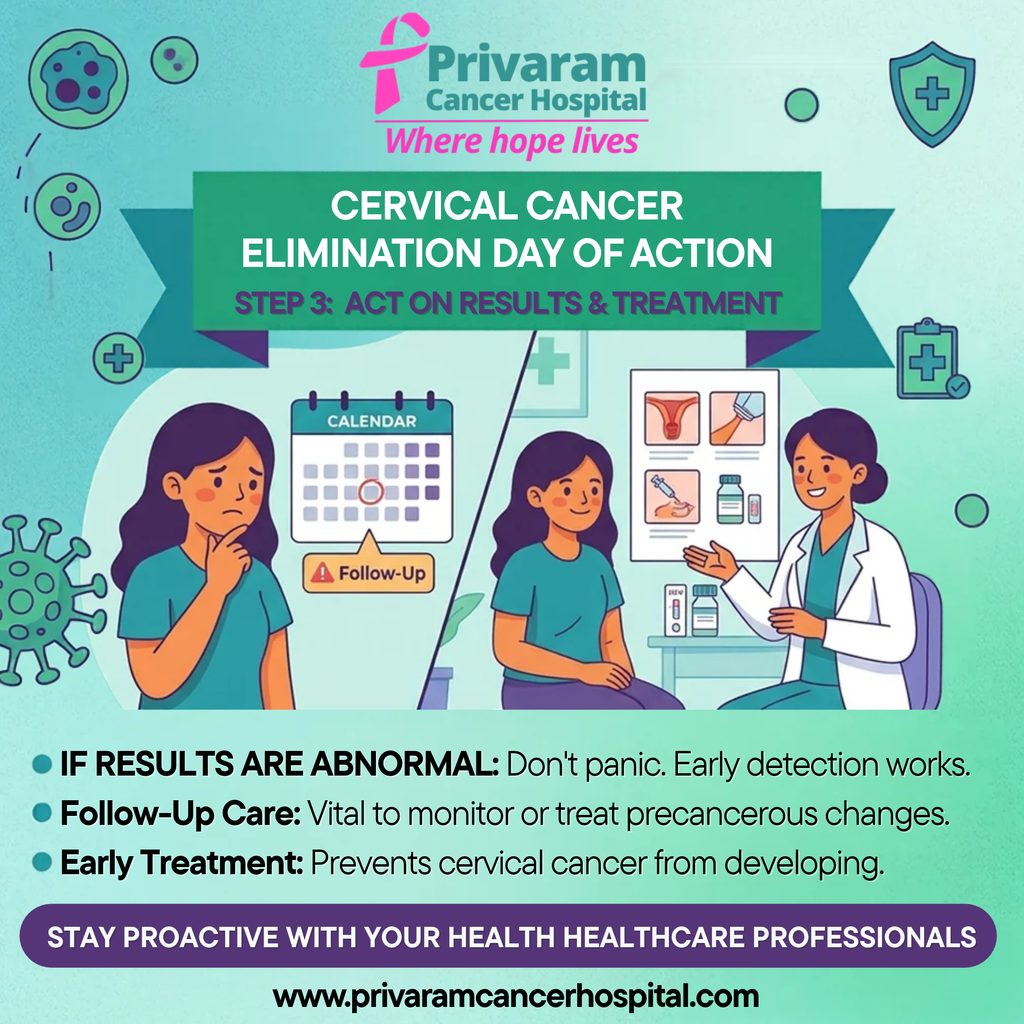
Completing a screening test is only the beginning. Understanding the results and taking appropriate action are equally important.
If screening results are abnormal, it does not necessarily mean that you have cervical cancer. However, further evaluation and follow-up are essential.
Important steps to remember:
- Don’t Ignore Abnormal Results: Discuss your screening reports with a qualified healthcare professional.
- Follow-Up Care: Attend recommended appointments and additional investigations to monitor cervical health.
- Early Treatment: Appropriate treatment of precancerous changes can prevent them from progressing to cervical cancer.
Following medical advice and completing the recommended care pathway can help protect your health and prevent delays in treatment.
Together, Let’s Work Towards a Cervical Cancer-Free Future
Cervical cancer elimination requires awareness, prevention, early detection, and access to timely treatment. HPV vaccination, regular screening, and appropriate follow-up care are three essential steps that can help protect women and future generations.
Let us encourage adolescents and their parents to understand the importance of HPV vaccination, motivate women to undergo regular cervical screening, and spread awareness about the importance of timely medical care.
Prevention Begins with Awareness. Early Detection Saves Lives. Together, We Can Make a Difference.
Consult Privaram Cancer Hospital
At Privaram Cancer Hospital, we are committed to promoting cancer awareness, preventive healthcare, early detection, and comprehensive cancer care.
Take the first step towards protecting your health. Consult our healthcare professionals for guidance on HPV vaccination, cervical cancer screening, and appropriate medical care.
Privaram Cancer Hospital – Where Hope Lives
Website: www.privaramcancerhospital.com